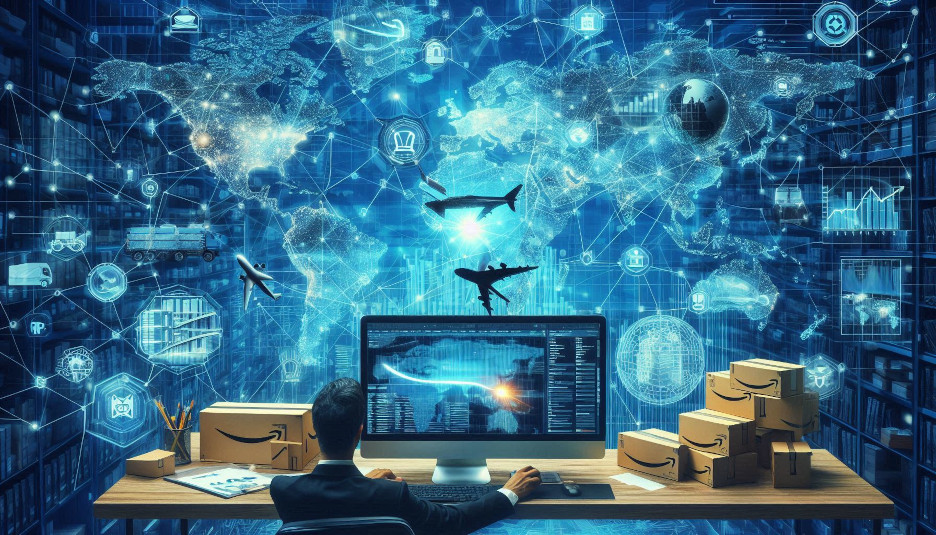
The Future of Work: How AI is Reshaping Warehousing and Logistics
- 05 Aug, 2025

For decades, the warehouse has been the unsung hero of the global economy—a vast, complex space where the physical world of goods meets the digital world of orders. But for all its importance, the fundamental model of warehousing and logistics has remained relatively unchanged. That is, until now. We are on the cusp of a revolution, one driven by the transformative power of Artificial Intelligence (AI).
AI is poised to reshape every facet of the supply chain, from the moment a product is created to the second it lands on a customer’s doorstep. It promises a future of unprecedented efficiency, accuracy, and speed. But it also raises profound questions about the future of work for the millions of people employed in this sector. This isn’t a story about robots replacing humans; it’s a story about how human roles will evolve to work alongside intelligent systems in the smart warehouse of the future.
The Smart Warehouse: AI in Action
The modern warehouse is a data-rich environment, making it fertile ground for AI. Here are some of the key ways AI is transforming operations inside the four walls of the warehouse:
1. The Rise of Intelligent Robots: The image of a worker walking miles of aisles to pick items is quickly becoming a thing of the past. Autonomous Mobile Robots (AMRs) are a game-changer. Unlike older Automated Guided Vehicles (AGVs) that followed fixed paths, AMRs use AI and sensors to navigate the warehouse dynamically, avoiding obstacles and finding the most efficient path. These robots can bring shelves of goods to a human worker (a “goods-to-person” system), drastically reducing travel time and increasing picking speed and accuracy.
2. AI-Powered Inventory Management: One of the biggest challenges in warehousing is knowing exactly what you have and where it is. AI is solving this with a combination of computer vision and predictive analytics. Drones equipped with cameras can fly through the warehouse overnight, scanning barcodes and using computer vision to conduct a full inventory count in a fraction of the time it would take a human team.
Beyond just counting, AI can predict future demand with incredible accuracy by analyzing historical sales data, market trends, and even external factors like weather patterns. This allows warehouses to optimize their stock levels, reducing both costly overstock situations and disappointing out-of-stock scenarios.
3. Predictive Quality Control: AI-powered cameras can be installed on conveyor belts to inspect products for defects in real-time. These systems can spot tiny imperfections that a human eye might miss, ensuring that only high-quality products are shipped to customers. This reduces returns and improves customer satisfaction.
4. Optimized Warehouse Layout and Slotting: How a warehouse is organized has a massive impact on its efficiency. AI can analyze product dimensions, sales velocity, and picking data to determine the optimal layout. It can suggest where to place items (a process called “slotting”) to minimize travel time for pickers. For example, fast-moving items might be placed closer to the packing stations, while items that are often bought together can be stored near each other.
Beyond the Warehouse: AI in the Broader Supply Chain
The impact of AI extends far beyond the warehouse doors, optimizing the entire logistics network.
1. Intelligent Route Optimization: AI algorithms can calculate the most efficient delivery routes in real-time, factoring in traffic, weather, and delivery windows. This not only ensures faster delivery times but also significantly reduces fuel consumption and carbon emissions.
2. Predictive Maintenance for Fleets: Sensors on trucks and other equipment can feed data into an AI system that predicts when a vehicle is likely to need maintenance. This allows companies to fix problems before they lead to a costly breakdown on the road, improving reliability and reducing downtime.
3. Enhanced Supply Chain Visibility: AI provides a level of transparency across the supply chain that was previously impossible. By integrating data from suppliers, shipping companies, and warehouses, AI can provide a real-time view of where goods are at any given moment. More importantly, it can predict potential disruptions—like a storm delaying a cargo ship or a factory shutdown—and allow logistics managers to proactively reroute shipments and manage customer expectations.
The Human Element: The Workforce of the Future
The rise of AI and automation inevitably leads to questions about job displacement. While it’s true that many manual, repetitive tasks will be automated, AI is also creating new roles and changing the nature of existing ones. The warehouse worker of the future is not a manual laborer, but a skilled technician and collaborator.
New and Evolving Roles:
- Robotics Technician: As warehouses fill with AMRs and other automated systems, there will be a huge demand for people who can maintain, troubleshoot, and manage these robotic fleets.
- Data Analyst: The smart warehouse generates a massive amount of data. Data analysts will be needed to interpret this data, identify trends, and provide insights that can be used to further optimize operations.
- AI/Human Interaction Manager: These professionals will be responsible for managing the collaboration between human workers and AI systems, ensuring that workflows are seamless and efficient.
- Upskilled Warehouse Associate: The role of the warehouse associate will shift from manual picking to more complex tasks. They will be responsible for overseeing robotic systems, handling exceptions, and performing tasks that require human dexterity and problem-solving skills, like quality control and packing delicate items.
The Importance of Upskilling and Reskilling:
The key to a successful transition is investment in training. Companies that are adopting AI have a responsibility to provide their employees with the skills they need to thrive in the new environment. This includes training in data literacy, robotics maintenance, and how to work effectively with new technologies. The jobs aren’t disappearing; they’re evolving, and the workforce must evolve with them.
Challenges on the Road to Adoption
The transition to an AI-powered supply chain is not without its challenges. The initial investment in robotics and AI software can be significant, which can be a barrier for smaller companies. There are also concerns about data security and the need to protect the vast amounts of information that these systems generate.
Perhaps the most significant challenge is managing the cultural shift. Successfully integrating AI requires more than just installing new technology; it requires a change in mindset, a commitment to continuous learning, and a focus on empowering the human workforce to take on new, more valuable roles.
The future of warehousing and logistics is a story of collaboration, where human ingenuity is augmented by the power of artificial intelligence. The warehouses of tomorrow will be safer, more efficient, and more productive than ever before. By embracing this technological shift and investing in their people, companies in the logistics sector can not only survive the AI revolution but lead it, delivering a better, faster, and smarter supply chain for everyone.